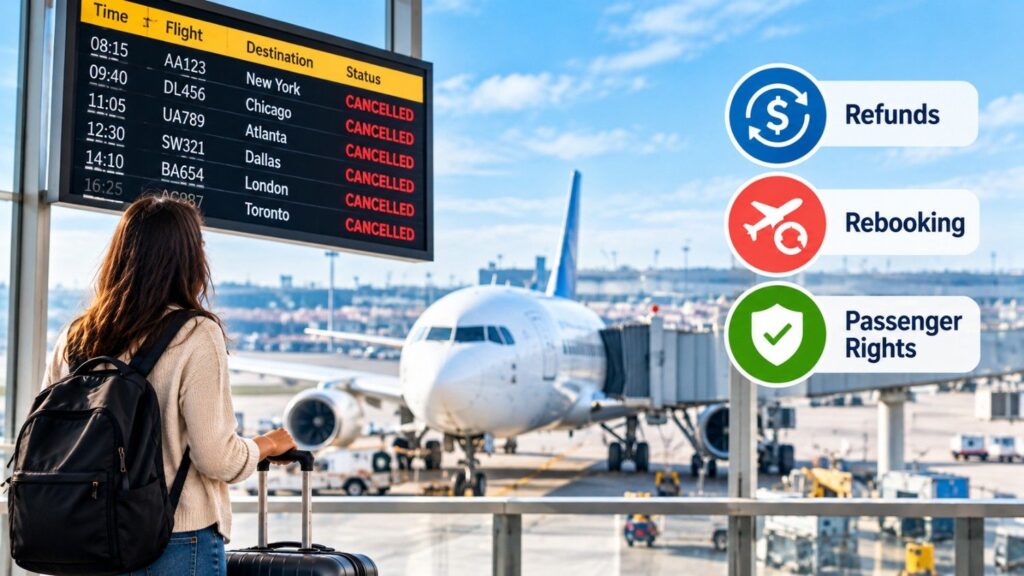
Booking a flight usually comes with an exciting travel plan. You choose your destination, arrange your accommodation, prepare your luggage, and look forward to your journey. But what happens when the airline suddenly cancels your flight?
Flight cancellations can create unexpected expenses, missed connections, delayed business plans, and unnecessary stress. One of travelers’ biggest concerns is what happens to their ticket money and whether the airline must arrange another flight.
This is where understanding airline flight cancellation policies becomes important.
Every airline has its own cancellation procedures, but government regulations may also govern passenger rights and refund obligations. Depending on your route and circumstances, you may be eligible for a ticket refund, an alternative flight, airport assistance, or additional compensation.
In this guide, we explain how airline flight cancellation policies work, when you can request a refund, what rebooking options are available, and which passenger rights you should understand before deciding to travel.
Whether you are traveling domestically or internationally, this information can help you handle unexpected flight disruptions with greater confidence.
What Is an Airline Flight Cancellation Policy?
An airline flight cancellation policy explains what happens when a scheduled flight is cancelled and what options are available to affected passengers.
These policies generally cover:
- Refund eligibility and payment procedures.
- Alternative flight arrangements.
- Ticket cancellation conditions.
- Travel credits and vouchers.
- Passenger assistance during disruptions.
- Compensation eligibility under applicable regulations.
- Special conditions for connecting and international flights.
An airline’s commercial ticket policy and its legal obligations are not necessarily the same.
For example, a non-refundable ticket may have restrictions when a passenger voluntarily cancels a trip. However, if the airline cancels the flight, different refund rules may apply.
Therefore, travelers should always distinguish between cancelling a ticket themselves and having their flight cancelled by the airline.
Why Do Airlines Cancel Flights?
Airlines operate complex schedules involving aircraft, airport facilities, flight crews, and air traffic management. An unexpected problem in any of these areas can affect scheduled flights.
Here are some common reasons airlines cancel flights.
1. Severe Weather Conditions
Weather is a major cause of flight disruptions. Heavy rain, snowstorms, strong winds, thunderstorms, and poor visibility can affect airport operations and flight safety.
When weather conditions become unsafe, airlines may cancel scheduled services.
2. Technical and Aircraft Maintenance Issues
Aircraft undergo regular maintenance and safety inspections. If the airline finds a technical problem, it may remove the aircraft from service until it resolves the issue.
Even when another aircraft is available, operational changes may affect the original flight schedule.
3. Airline Operational Problems
Airlines sometimes face operational challenges, including aircraft availability, staffing shortages, crew scheduling difficulties, and unexpected logistical problems.
These situations can result in cancelled flights or changes to departure schedules.
4. Air Traffic Control Restrictions
Air traffic control authorities manage aircraft movements to keep airspace operations safe and efficient.
Airport congestion, restricted airspace, and traffic management decisions can affect flight schedules and sometimes lead to cancellations.
5. Security and Emergency Situations
Security concerns, airport emergencies, and other unexpected events can also require airlines to cancel flights.
The reason for cancellation matters because it can influence whether passengers qualify for additional compensation under the applicable passenger-rights regulations.
What Happens When an Airline Cancels Your Flight?
When an airline cancels your flight, it will generally notify passengers through email, SMS, its mobile application, or other official communication channels.
Depending on the airline’s policy and applicable regulations, passengers may be offered different options.
Option 1: Get a Refund
If you no longer want to travel, you may be eligible to receive a refund for your cancelled flight.
The refund may include the unused ticket price and applicable taxes and fees, depending on the rules governing your booking.
For example, passengers covered by US Department of Transportation refund rules are generally entitled to a refund when an airline cancels a flight and they choose not to accept alternative transportation or travel credit.
Option 2: Rebook on Another Flight
If you still want to reach your destination, you can ask the airline about alternative travel arrangements.
Depending on availability and applicable regulations, the airline may offer:
- The next available flight.
- A different departure time.
- An alternative route.
- A flight operated by another carrier.
- Travel on another date.
Before accepting a replacement flight, check its departure time, arrival time, connecting airports, and baggage arrangements.
Option 3: Accept a Travel Voucher
Some airlines offer travel vouchers or credits instead of an immediate cash refund.
These vouchers may be useful if you plan to travel with the same airline again. However, check the expiration date, restrictions, and booking conditions before accepting one.
Remember that a voucher is not automatically the same as a cash refund. In some jurisdictions, passengers have the legal right to choose a refund when an airline cancels a flight.
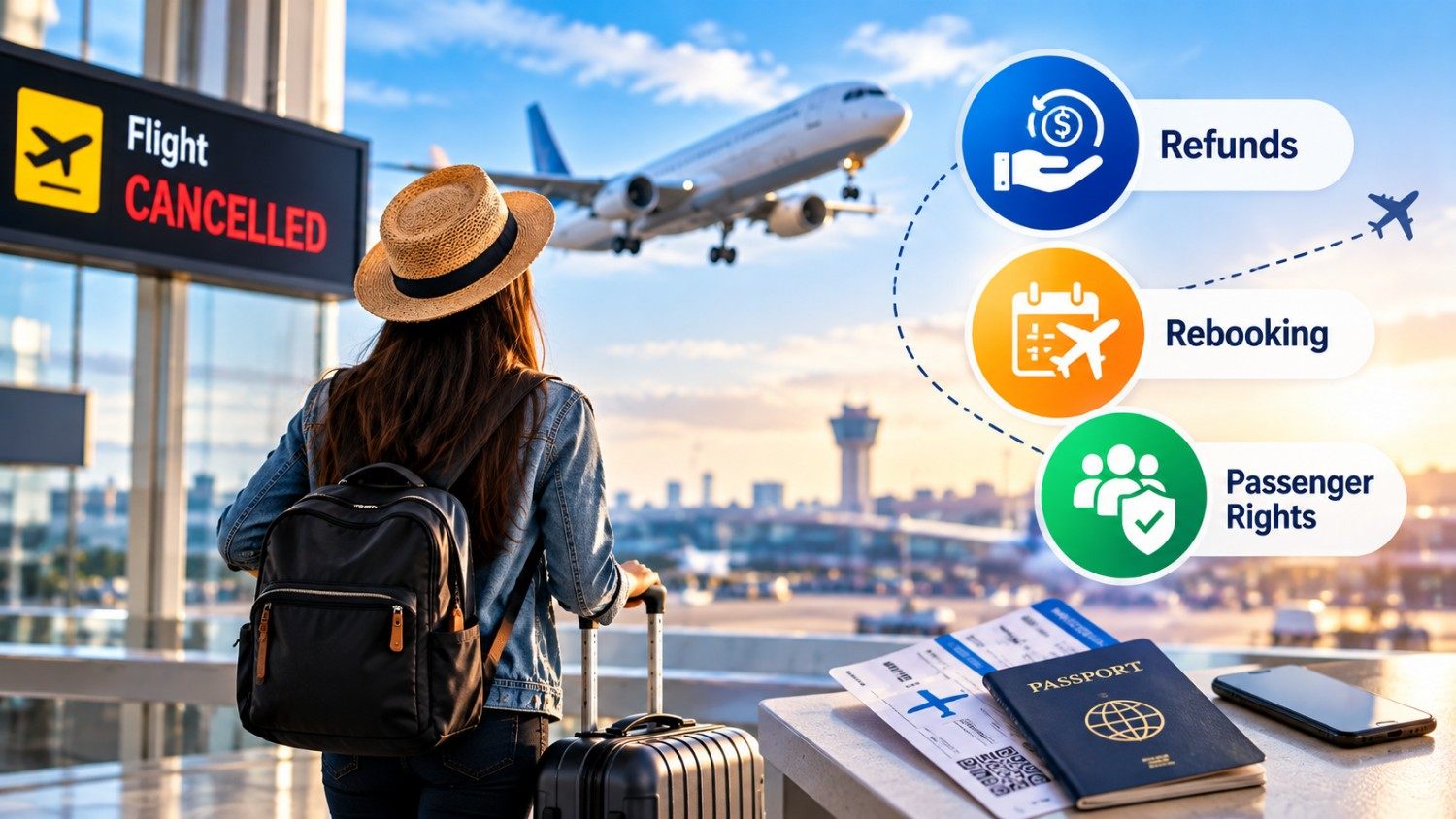
Airline Flight Cancellation Refund Policies Explained
One of the most common questions travelers ask is: Can I get my money back if an airline cancels my flight?
In many situations, the answer is yes. However, the exact refund conditions depend on the country, route, booking arrangement, and applicable passenger-rights regulations.
Here are some important examples.
Flight Refund Rules in the United States
The US Department of Transportation (DOT) has established refund requirements for flights to, from, and within the United States.
Under these rules, passengers are generally entitled to a refund when an airline cancels a flight or makes a qualifying significant change and the passenger does not accept the alternative transportation or compensation offered.
Important points include:
- Passengers can choose a refund instead of travelling on an alternative flight.
- Eligible refunds must generally be issued to the original form of payment.
- Airlines cannot replace an owed refund with a voucher unless the passenger chooses to accept it.
- Credit card refunds must generally be processed within seven business days.
- Refunds for other payment methods must generally be processed within 20 calendar days.
These protections apply subject to the relevant DOT requirements.
For additional information, visit the US Department of Transportation’s official refund guidance.
Flight Cancellation Rules in the European Union
Passengers travelling on eligible flights covered by EU Regulation 261/2004 have specific protections when an airline cancels a flight.
In general, passengers can choose between:
- Reimbursement of their ticket.
- Rerouting to their final destination at the earliest opportunity.
- Rerouting at a later date that suits them, subject to seat availability and applicable conditions.
Eligible passengers may also have rights to meals, refreshments, hotel accommodation, and transportation while waiting for alternative travel arrangements.
Additional financial compensation may be available depending on when the airline informed passengers about the cancellation, the alternative flight offered, and the circumstances behind the disruption.
For more details, visit the European Union’s official air passenger rights information.
Flight Cancellation Policies in Other Countries
Flight cancellation rules vary worldwide.
Other countries may have their own aviation authorities, consumer protection laws, and passenger compensation requirements.
For international journeys, check which regulations apply to your specific flight rather than assuming your departure country’s rules automatically apply.
Airline Rebooking Policy: How Does It Work?
Rebooking allows passengers affected by a cancelled flight to continue their journey using an alternative flight.
Many airlines provide rebooking assistance when they cancel scheduled services, although the available arrangements depend on their policies and applicable regulations.
Here are some common rebooking options.
Rebooking on the Next Available Flight
Airlines may offer seats on their next available service to the same destination.
This is often a convenient option for passengers who need to reach their destination as soon as possible.
Rebooking Through Another Airport
Sometimes the airline may suggest departing from or arriving at a different airport.
This option can help passengers reach their destination when the original airport has limited flight availability.
Before accepting, consider the additional transportation time and costs.
Rebooking With Another Airline
Depending on the circumstances and applicable obligations, an airline may arrange alternative transportation through another carrier.
Ask the airline whether this option is available and confirm the complete travel itinerary before agreeing.
Changing Your Travel Date
If your travel plans are flexible, you may be able to request an alternative departure date.
Ask about available dates, additional charges, and any restrictions that may apply to your replacement booking.
Important: Before purchasing another ticket yourself, contact the airline and understand your existing rebooking and refund options. Do not assume that the airline will automatically reimburse an independently purchased replacement ticket.
What Are Your Rights as a Passenger When a Flight Is Cancelled?
Passenger rights protect travelers when airlines cancel flights or make significant changes to scheduled services.
Although the specific protections vary by jurisdiction, several important rights may apply.
1. Right to Information
Passengers should receive information about flight cancellations and relevant alternative arrangements.
Keep all airline notifications and communication records for future reference.
2. Right to a Refund
Depending on the applicable regulations, passengers may be entitled to a refund if they choose not to travel following an airline cancellation.
3. Right to Alternative Transportation
Some passenger-rights regulations require airlines to offer eligible passengers rerouting options.
This may include travelling to the final destination at the earliest opportunity or choosing a later date.
4. Right to Assistance
In certain circumstances, passengers may be entitled to meals, refreshments, hotel accommodation, and transportation while waiting for another flight.
For example, eligible passengers covered by EU Regulation 261/2004 may receive assistance during the waiting period.
5. Right to Compensation
Depending on the applicable laws, passengers may qualify for additional financial compensation.
However, compensation is not guaranteed for every cancelled flight. The timing of the cancellation notice, reason for disruption, and alternative arrangements can all affect eligibility.
Are You Eligible for Flight Cancellation Compensation?
A ticket refund and flight cancellation compensation are different.
A refund generally returns the money paid for an eligible unused flight. Compensation is an additional payment that may be available under certain passenger-rights regulations.
For example, under EU Regulation 261/2004, eligible passengers may qualify for compensation of:
| Flight distance | Potential compensation |
|---|---|
| 1,500 km or less | €250 |
| More than 1,500 km within the EU, and other flights between 1,500 and 3,500 km | €400 |
| Other flights over 3,500 km | €600 |
These amounts are subject to eligibility conditions.
Compensation may not be payable when the airline informs passengers sufficiently in advance or offers qualifying alternative transportation within the time limits specified by the regulation.
Airlines may also be exempt from compensation when they establish that extraordinary circumstances caused the cancellation and the disruption could not have been avoided even if all reasonable measures had been taken.
Importantly, extraordinary circumstances do not automatically remove every passenger right. Refund, rerouting, and assistance obligations may still apply.
Always check the applicable regulations before submitting a compensation claim.
What Happens If Your Connecting Flight Is Cancelled?
A cancelled connecting flight can make an already complicated journey even more stressful.
Your options depend partly on whether you bought both flights under one reservation or booked them separately.
When Both Flights Are on One Booking
If your connecting flights are part of a single reservation, contact the airline responsible for the journey.
Ask about alternative transportation to your final destination and whether any additional assistance is available.
Depending on the applicable rules, the airline may have obligations relating to the complete journey rather than only the cancelled flight.
When Flights Are Booked Separately
Separate bookings can create additional complications.
For example, if your first flight is cancelled and you miss a separately booked onward flight, the second airline may not be responsible for your missed connection.
Contact both airlines as soon as possible and review your travel insurance policy for possible coverage.
For future trips, booking connecting flights under one reservation can offer additional protection in certain situations.
Can Airlines Provide Hotel Accommodation and Meals After a Cancellation?
Passengers sometimes need to stay overnight because their replacement flight is scheduled for the following day.
Whether the airline must provide hotel accommodation or meals depends on the applicable passenger-rights regulations and circumstances.
Under EU Regulation 261/2004, eligible passengers may be entitled to:
- Meals and refreshments appropriate to the waiting time.
- Hotel accommodation when an overnight stay becomes necessary.
- Transportation between the airport and hotel.
- Communication facilities, such as telephone calls or messages.
If the airline does not provide assistance when legally required, keep receipts for necessary and reasonable expenses.
You can then contact the airline and ask about reimbursement.
Other countries may have different rules, so do not assume that these EU protections apply to every international flight.
What Should You Do If an Airline Refuses Your Refund?
If you believe you are entitled to a refund but the airline refuses your request, you can take several steps.
Step 1: Review the Cancellation Notification
Check the airline’s message and understand why your flight was cancelled.
Step 2: Check the Applicable Refund Rules
Review the airline’s published cancellation policy and the passenger-rights regulations that apply to your journey.
Step 3: Contact Customer Support
Submit a written refund request through the airline’s official website or customer service department.
Include your booking reference, flight details, cancellation notification, and payment information.
Step 4: Keep a Record of Communication
Save emails, messages, case numbers, and any responses received from the airline.
Step 5: Escalate Your Complaint if Necessary
If the airline does not resolve the issue, consider contacting the relevant aviation regulator or consumer protection authority in your jurisdiction.
Depending on the payment method and circumstances, you may also be able to seek assistance from your payment provider.
Tips for Avoiding Problems With Flight Cancellations
Although passengers cannot control airline scheduling decisions or unexpected disruptions, a few simple precautions can make travelling easier.
- Understand the airline’s policy: Review refund and rebooking conditions before booking.
- Keep booking documents: Save your ticket, booking confirmation, and payment receipt.
- Monitor flight notifications: Enable SMS and email alerts from your airline.
- Consider travel insurance: Review coverage for cancellations, missed connections, and additional accommodation expenses.
- Allow enough connection time: Avoid extremely short layovers when planning connecting journeys.
- Use official communication channels: Contact the airline through its verified website, application, or airport service counter.
- Keep expense receipts: Save receipts for additional expenses that may qualify for reimbursement.
A little preparation can make an unexpected flight cancellation easier to manage.
Frequently Asked Questions About Airline Flight Cancellation Policies
Airlines may cancel flights for operational, safety, weather, and other reasons. However, passengers should check the airline’s notification and applicable passenger-rights requirements to understand what information and assistance they are entitled to receive.
In many circumstances, yes. For example, US DOT rules generally require refunds when an airline cancels a flight and the passenger does not accept alternative transportation or other offered compensation. Other jurisdictions have their own refund requirements.
Depending on the applicable regulations, passengers may have the right to choose a refund instead of travelling on an alternative flight offered following a cancellation.
The processing time depends on the country, airline, and payment method.
Under US DOT rules, eligible refunds must generally be processed within seven business days for credit card payments and 20 calendar days for other payment methods.
Not necessarily. Under EU passenger-rights rules, extraordinary circumstances such as certain severe weather conditions may exempt an airline from paying cancellation compensation. However, eligible passengers may still have rights to reimbursement, rerouting, and assistance.
You may qualify under certain passenger-rights regulations. Under EU rules, cancellations communicated less than 14 days before departure may qualify for compensation, depending on the alternative arrangements and other conditions.
Your refund, rebooking, and compensation rights depend on the flight route, operating airline, and applicable regulations. Check the relevant passenger-rights rules for your journey.
Yes, if you choose to accept one. However, in jurisdictions where passengers are entitled to a refund following an airline cancellation, they should understand that they may not be required to accept a voucher instead.
A non-refundable ticket generally restricts voluntary cancellations by the passenger. It does not necessarily remove refund rights when the airline cancels the flight. Applicable laws and booking conditions determine the outcome.
Visit the airline’s official website and look for its cancellation, refund, or passenger-rights section. You can also review the relevant government aviation authority’s website for additional information.